From news to narrative. Turning headlines into brand authority
Today, news lives for a few hours. Sometimes minutes. But the narrative built around that news can live for years. In a world where attention is scarce and AI increasingly decides what gets summarized, quoted and recommended, reacting fast is no longer enough. What matters is interpretation. This is where newsjacking stops being a tactic and starts becoming a long-term authority play.
Why Google and LLMs are hungry for your news
Large language models like ChatGPT or Claude have an uncomfortable problem: their core training data is frozen in the past. They do not “know” what happened yesterday unless they actively retrieve it. To answer questions about fresh events, they rely on RAG - Retrieval-Augmented Generation - which means pulling real-time information from the web via search engines, news indexes or tools like Bing or Perplexity.
This changes the rules of visibility. AI is not only looking for raw facts. Those are everywhere. What it really needs is context and interpretation. When a new regulation, market move or product launch happens, LLMs search for content that explains what it means, who it affects and why it matters. If you are the first brand or expert to publish a clear, structured explanation, you effectively become a “source zero” for AI-generated answers. Not because you were loud, but because you were early and useful.
This is exactly why timely blog posts and expert commentary increasingly influence LLM visibility. Fresh news gives AI something to fetch. Thoughtful interpretation gives it something to quote.
Silence is a risk. Especially in social media
For a long time, brands were told to “stay neutral” and avoid commenting on public or industry issues. Today, that silence often reads as irrelevance. Social platforms have trained audiences to expect perspective, not just promotion.
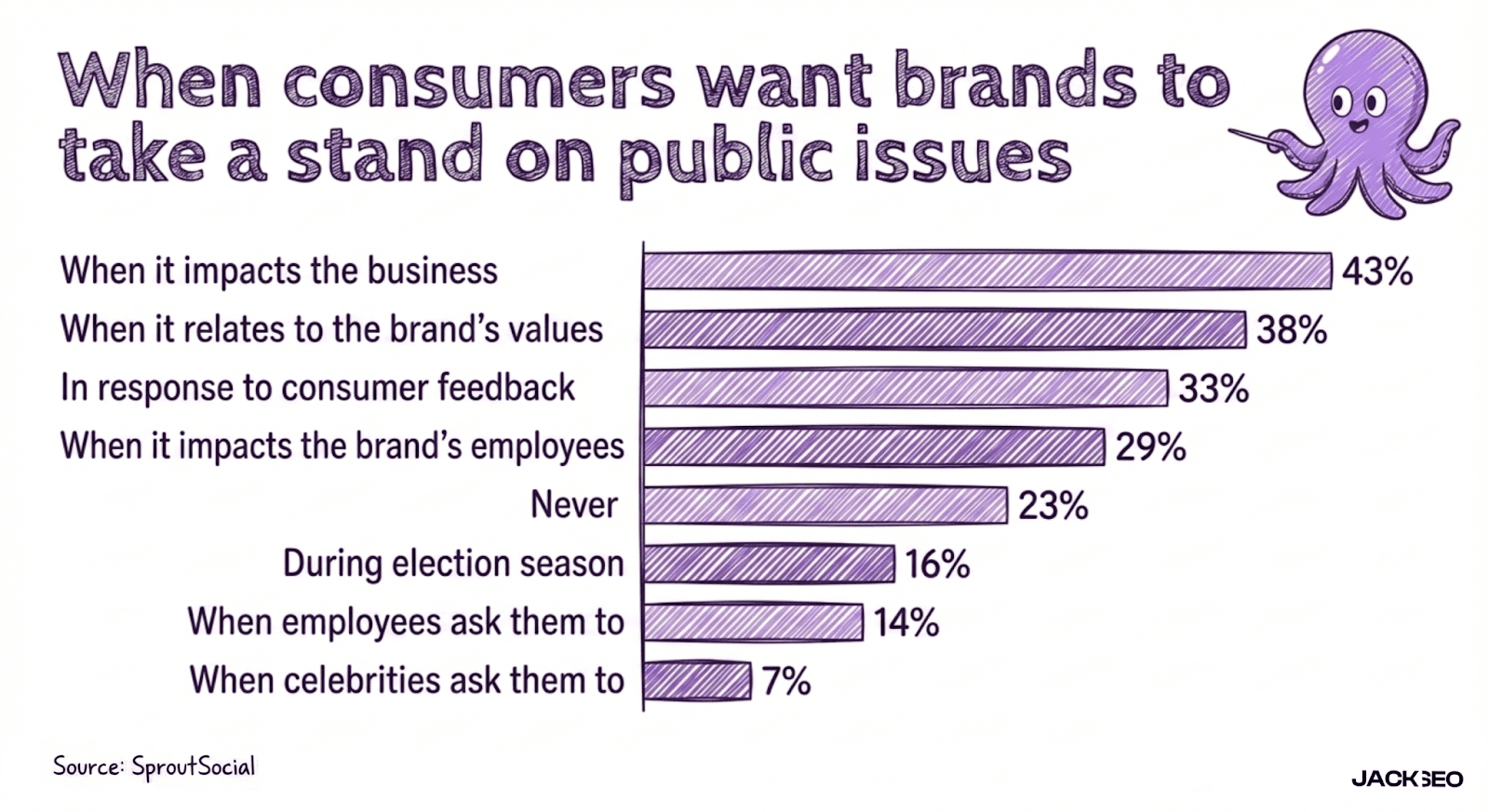
According to data from Sprout Social, consumers expect brands to speak up when issues impact the business, relate to brand values or respond directly to customer feedback. Silence is rarely the safest option. What people want is not hot takes, but clarity. They already have headlines from CNN or Reuters. What they lack is guidance on how to understand those headlines.
This is where narrative beats news. A brand that explains how a regulatory change affects customers, or why a market shift matters to a specific industry, builds trust. Over time, that trust compounds into authority. The brand becomes a reference point, not just a logo in the feed.
Hidden buyers do not read ads. They read opinions
In B2B especially, most purchasing decisions start long before sales ever enters the conversation. These are the so-called “hidden buyers” - people researching quietly, learning the landscape and forming opinions without raising their hand.
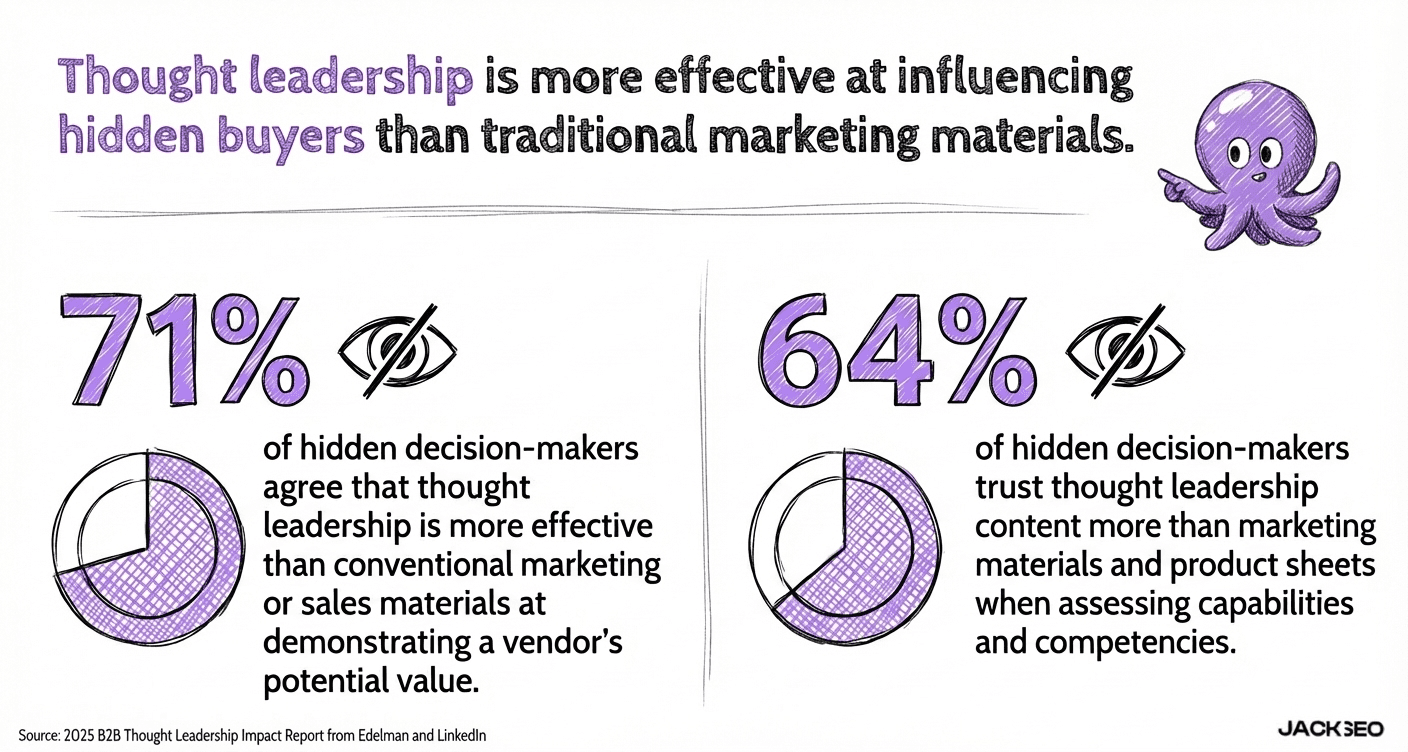
Data from the 2025 B2B Thought Leadership Impact Report by Edelman and LinkedIn shows that thought leadership content is significantly more effective at influencing these hidden decision-makers than traditional marketing materials or product sheets. Buyers trust expertise over slogans. They want to understand how leaders think, not what they sell.
News-driven content plays a key role here. When a brand consistently comments on relevant industry developments, it signals competence and awareness. Over time, these signals accumulate. When a buying decision finally happens, the brand that helped shape understanding often wins trust first.
From newsjacking to trendshaping
Reacting to every headline is not a strategy. It is noise. Smart newsjacking is selective. It focuses on topics where you have real expertise and a right to speak. The goal is not to chase attention, but to shape interpretation.
A good rule is simple: if you cannot explain how a piece of news changes decisions, behavior or risk for your audience, do not comment on it. But if you can translate complexity into clarity, you are not hijacking news. You are building narrative gravity.
This is where content marketing, SEO and LLM visibility intersect. High-quality, news-driven articles tend to earn links, mentions and engagement faster. Search engines reward that relevance. LLMs reward that structure and authority. The same content works across channels because it is anchored in meaning, not keywords alone.
At JackSEO, this is exactly how we approach news-driven content. We help teams identify which stories are worth reacting to, frame them in a way that aligns with brand voice, and publish fast enough to matter - without sacrificing depth or credibility. The result is content that ranks, gets referenced and actually gets remembered.
Sales happens in the comments, not in the CTA
In modern B2B, deals are rarely closed by landing pages alone. They are influenced by conversations. LinkedIn comments, shared posts and saved articles quietly shape perception. Decision-makers buy from brands and people who taught them something new about their own industry.
News-based commentary is often the trigger. A well-timed post explaining a market shift can spark discussions, attract inbound questions and open doors that cold outreach never could. This is not accidental. It is how authority turns into a pipeline.
Write less news. Build more narrative
The next time a major industry headline breaks, do not rush to repost it. Ask a better question: what does this change for my audience? Answer that once, clearly and early.
News fades fast. Narratives last. And in a world where AI summarizes reality for millions of users, the brands that shape interpretation will always be more visible than those that only repeat facts.
If you want AI to understand your brand tomorrow, start explaining today.